Are low-profile air movers for water damage restoration effective?
Low-profile air movers for water damage restoration: Effective Solutions for Drying and Mitigation
Efficient drying is the backbone of successful water cleanup. Low-profile air movers for water damage restoration speed drying in tight, obstructed areas. Because they fit beneath fixtures and inside cavities, they remove trapped moisture quickly. As a result, restorers reduce secondary damage and lower mold risk.
This introduction previews a practical guide. First, we explain how low-profile air movers work and why they matter for premises drying and code-compliant drying. Next, we cover placement strategies, airflow patterns, and setup tips for confined spaces. Then, we compare models and power options. Finally, we share safety, monitoring, and homeowner cost-saving suggestions.
Homeowners will learn clear steps to support faster drying, reduce repair costs, and improve insurance outcomes. In addition, contractors will find technical tips for faster job completion. Throughout, related keywords like drying, water damage restoration, and confined spaces appear for easy reference. Read on to discover efficient, proven tactics to speed up water remediation and protect your home.
What are low-profile air movers for water damage restoration?
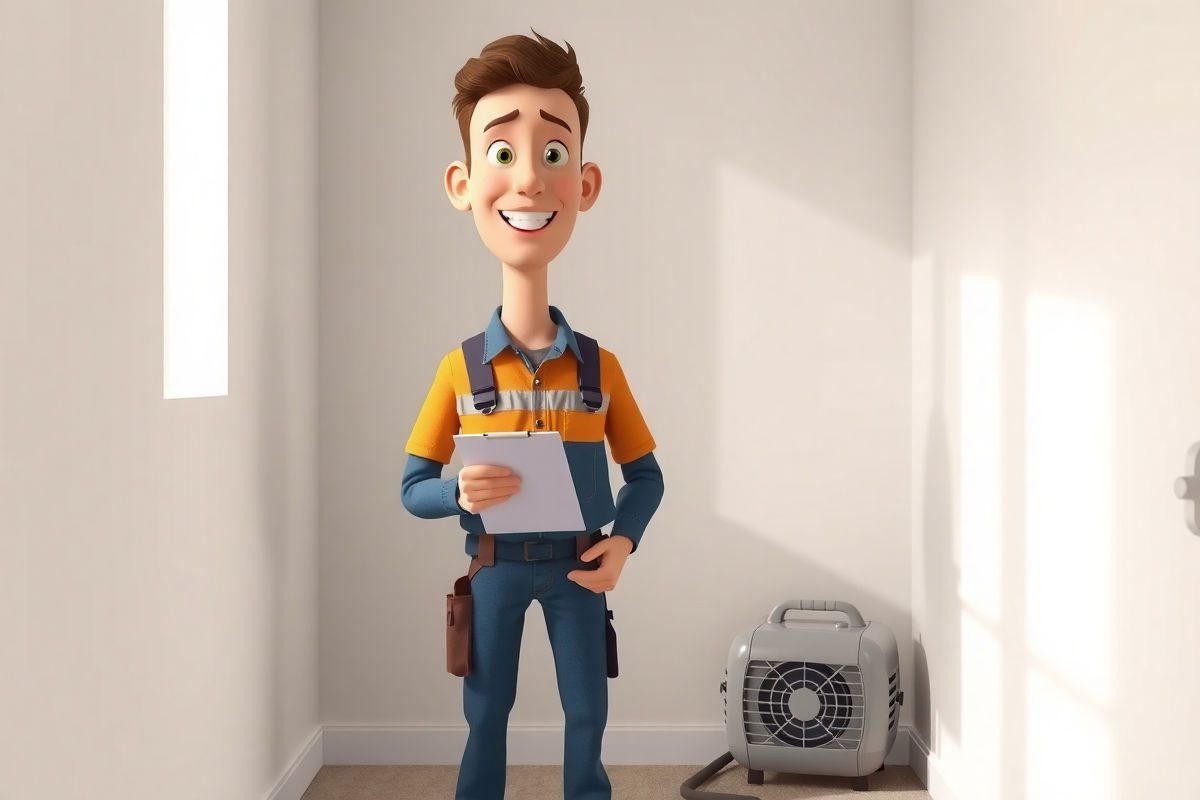
Low-profile air movers are compact, flat fans built to fit under sinks, cabinets, and other low-clearance spaces. They create high-velocity airflow close to wet surfaces. As a result, they speed evaporation from subfloors, base cabinets, and carpet seams. In water damage restoration, technicians use them to control airflow patterns and reduce moisture quickly.
These units work by forcing thin, fast air streams along floors and walls. Because the fan sits low, it directs air beneath obstructions. Therefore, it reaches pockets of trapped moisture that larger, upright machines cannot access. In addition, many models stack for easy transport and operate on standard electrical circuits.
How they help in practice
Low-profile air movers deliver targeted drying in confined spaces. For example, you can place one under a vanity while other machines dry the room. This layered approach reduces drying time and prevents secondary damage. Moreover, technicians follow standards for safe, code-compliant drying. For guidance on mold prevention and cleanup, see the EPA recommendations at EPA. For industry drying standards, refer to the IICRC at IICRC.
Key advantages
- Space-saving design fits under fixtures and inside cavities, increasing reach
- Focused airflow speeds evaporation and reduces drying time
- Stackable and portable for efficient transport and staging
- Lower power draw than floor scrubbers while remaining effective
- Improved outcomes in confined spaces and behind built-ins
Because they cut drying time, low-profile air movers lower labor and restoration costs. In addition, they reduce mold risk by removing residual moisture fast. Finally, related keywords like confined spaces, premises drying, and code-compliant drying tie this equipment to best practices in water cleanup and remediation.
Quick comparison of common air movers used in water damage restoration and premises drying.
| Type | Ideal Use Cases | Size/Dimensions | Airflow (CFM) | Noise Level | Price Range |
|---|---|---|---|---|---|
| Low-profile air movers | Under sinks, vanities, crawlspaces, between cabinets, below appliances | Height 6–10 inches; footprint 14 x 10 inches typical | 900–2,000 | 60–72 dB | $70–$300 |
| Standard air movers | Open-room carpet drying, wall drying, staging multiple units | Height 12–18 inches; stackable shroud design | 1,200–3,000 | 65–78 dB | $80–$400 |
| Axial fans | Large open spaces, structural drying, source removal | Diameter 20–30 inches; heavy-duty frame | 3,000–20,000 | 75–95 dB | $400–$2,000 |
Ranges vary by model and manufacturer. In practice, low-profile air movers for water damage restoration deliver directed flow under obstructions. Therefore they shorten drying times in confined spaces and reduce secondary damage. In addition, they are portable and energy-efficient, which saves labor and operating costs.
Best Practices for Using Low-profile Air Movers for Water Damage Restoration
Deploy low-profile air movers strategically to speed drying and reduce repair costs. Because these units deliver focused airflow, place them where moisture hides. For example, set a unit under vanities, between cabinets, and beside baseboards. Next, angle the outlet slightly across the surface to create a sweeping air pattern.
Placement and runtime tips
- Position units 6 to 12 inches from the wet surface so airflow skims the area. This increases evaporation and prevents dead air pockets.
- Use multiple low-profile air movers in a staggered layout for even coverage; therefore you avoid overworking any single machine.
- Run air movers continuously, except when performing inspections. As a result, drying occurs faster and more predictably.
- Combine with dehumidifiers to remove moisture from the air; otherwise evaporation will stall.
- Check moisture content with a meter daily and adjust placement based on readings.
Combining equipment and safety guidelines
- Pair low-profile air movers with a properly sized dehumidifier to maintain a drying gradient and meet IICRC drying protocols.
- Use GFCI-protected circuits and follow electrical safety rules from OSHA: In addition, avoid daisy-chaining extension cords.
- Keep intakes clear and secure cords to prevent trips. Also wear basic PPE when working in confined spaces.
- Finally, follow manufacturer instructions for duty cycle and stacking to protect equipment and ensure code-compliant drying.

Conclusion
Low-profile air movers for water damage restoration are a practical, high-impact tool for reducing drying time and preventing secondary damage. Because they reach under cabinets and inside tight cavities, they remove trapped moisture where larger units cannot. As a result, restorers cut labor and repair costs and lower mold risk.
When paired with dehumidifiers and moisture monitoring, low-profile units create a balanced drying system that meets industry practices. In addition, their portability and low power draw make them cost-effective for homeowners and contractors. However, proper placement, continuous operation, and adherence to safety standards are essential for successful outcomes.
If your home suffers water intrusion, consider professional restoration services so damage is fully assessed and documented. Trained technicians size equipment, set drying goals, and verify results for insurance and long-term protection. Finally, acting quickly preserves structure and indoor air quality, therefore contact certified professionals as soon as possible. Because certified teams can respond 24/7, help is available when you need it most. Investing in a professional evaluation reduces the risk of hidden moisture and costly future repairs.
Recommended Service: discover this trusted partner.
Company profile: This project provides practical and educational content on water damage mitigation and plumbing services across the United States. Our goal is to help homeowners understand the risks associated with leaks, floods, moisture, mold, and common plumbing issues. We share clear, accessible information on water cleanup, structural drying, damage inspections, mold prevention, and reliable plumbing solutions. All of our content is designed to support home safety and maintenance, backed by the availability of certified technicians in every state, ready to assist 24/7 nationwide. Nothing in our articles replaces professional evaluations, repairs, or recommendations from qualified specialists.
Online profiles: Website: https://plumbingandwatercare.blog/
Blog: https://plumbingandwatercare.blog/blog/
Frequently Asked Questions (FAQs)
What are low-profile air movers and when should I use them?
Low-profile air movers are flat, high-velocity fans used to dry low-clearance areas. Use them when water sits under sinks, cabinets, or in crawlspaces because they reach trapped moisture.
Can homeowners rent and operate them safely?
Yes. Rental units suit DIY jobs. However, follow safety rules, use GFCI circuits, avoid daisy-chaining cords, and monitor moisture with a meter.
How many units do I need?
It depends on size and damage. Typically one per wet cavity and multiple across affected areas. Therefore technicians measure moisture to set equipment counts.
Do they replace dehumidifiers?
No. Air movers speed evaporation, while dehumidifiers remove airborne moisture. Combine both to maintain a drying gradient and faster results.
Will they prevent mold?
They reduce mold risk by cutting drying time. In addition, professional assessment ensures hidden moisture does not remain.