
How Mold & Wildfire Smoke Impact Indoor Air Quality?
Indoor air quality in remediation: mold, wildfire smoke, and thirdhand smoke risks
Indoor air quality in remediation: mold, wildfire smoke, and thirdhand smoke risks matters for everyone who returns to a restored space. Because airborne hazards linger, remediation teams must do more than remove visible damage. Mold spores embed in insulation and drywall, and wildfire smoke deposits fine particles and residues, therefore increasing cleanup complexity. Emerging research shows fire residues can act like thirdhand smoke, lingering on surfaces and in dust, therefore creating long term exposure risks.
In particular, poor indoor air quality harms occupants and workers. It can trigger respiratory symptoms, worsen mental health, and prolong project timelines. Therefore, remediation professionals need air monitoring, targeted HEPA filtration, and proper containment to reduce mold, volatile particles, and surface residues. Also, team wellbeing matters because stress and chronic exposure increase error rates.
To help, this article explains the key risks, practical controls, and protective strategies. Additionally, you will learn about mold remediation, wildfire smoke cleanup, and managing thirdhand smoke like a contaminant. For reference, related keywords include mold remediation, IAQ, smoke residues, and remediation teams.
Mold contamination and Indoor air quality in remediation: mold, wildfire smoke, and thirdhand smoke risks
Mold contamination changes the way air smells and feels in a home. During remediation, disturbed mold releases spores and fragments into the air. As a result, indoor air quality can fall quickly, exposing occupants and workers to respirable particles and biologically active fragments.
Health risks from disturbed mold and mold spores
- Allergic reactions: sneezing, nasal congestion, red eyes, and skin rashes. These symptoms often appear within hours of exposure.
- Asthma exacerbation: in sensitized people, mold exposure can trigger attacks and wheeze.
- Respiratory irritation: coughing, throat soreness, and chronic sinus problems from ongoing exposure.
- Immune and opportunistic infections: rare, but possible in immunocompromised people during heavy contamination.
- Chronic fatigue and cognitive effects: some occupants report persistent fatigue and concentration problems after long exposures.
Common household mold sources
- Flooded basements and after hidden leaks behind walls.
- Damp attics with poor ventilation.
- Carpet and padding saturated by spills or floods.
- HVAC systems and ductwork that collect moisture and dust.
- Porous materials such as insulation, drywall, and ceiling tiles.
Expert findings and authority
The CDC warns, “Exposure to damp and moldy environments may cause a variety of health effects, or none,” highlighting variable responses across people CDC. The EPA notes, “Some people are sensitive to molds,” and recommends prompt remediation to reduce exposure EPA. The National Academies review links dampness and mold with respiratory symptoms and asthma exacerbation, reinforcing that remediation must control airborne spread National Academies.
For remediation teams, therefore, wet removal, containment, negative air, and HEPA filtration matter. Also, protect mental health because chronic exposure and stress worsen outcomes.
Related keywords: mold remediation, indoor air quality, IAQ, mold spores, remediation teams, respiratory health, containment, HEPA filtration.
How wildfire smoke changes Indoor air quality in remediation: mold, wildfire smoke, and thirdhand smoke risks
Wildfire smoke brings a hidden load of fine particles and chemical residues inside homes. These tiny particles, called PM2.5, travel through open windows, doors, and HVAC systems. As a result, indoor air can worsen even when buildings look sealed. In remediation, smoke-laden dust and soot adhere to surfaces. Therefore, teams must treat smoke as both an airborne and surface contamination problem.
How smoke infiltrates and lingers
- Penetration pathways: gaps around windows, dryer vents, attic soffits, and shared HVAC intakes let smoke in.
- Particle behavior: PM2.5 stays suspended for hours and travels with indoor airflow. As a result, particles deposit in carpets and on porous materials.
- Chemical residues: combustion leaves semi volatile compounds that bind to surfaces, which complicates cleaning and increase long term exposure risks.
Evidence and health context
Wildfire smoke contains hazardous PM2.5 and gases that affect breathing. The EPA provides technical guidance on wildfire smoke and indoor air controls, because smoke requires both filtration and source control to protect occupants EPA guidance on wildfire smoke. AirNow explains real time exposure risks and recommends reducing infiltration during wildfire events AirNow recommendations. Globally, fine particle pollution drives major health burdens; WHO estimates ambient air pollution causes millions of premature deaths every year, underscoring PM2.5 dangers WHO facts on air quality.
Why this complicates remediation
- Masking: smoke residues alter odors and hide dampness, therefore making mold detection harder.
- Cross contamination: cleaning one room can re-aerosolize soot throughout the structure if containment fails.
- Equipment stress: HEPA and activated carbon filters load quickly, so change intervals must shorten.
Quick comparison of risks: Indoor air quality in remediation: mold, wildfire smoke, and thirdhand smoke risks
| Hazard (SEO: Indoor air quality in remediation: mold, wildfire smoke, and thirdhand smoke risks) | Primary exposure route | Key health risks | Typical remediation controls |
|---|---|---|---|
| Mold (mold remediation, IAQ) | Airborne spores, fragments, settled dust | Allergies, asthma, respiratory irritation, infection risk | Containment, HEPA negative air, wet removal |
| Wildfire smoke (wildfire smoke, smoke residues) | Infiltration of PM2.5, HVAC entry, settled soot | Respiratory inflammation, cardiovascular stress, odor and surface residues | Seal gaps, HVAC filtration, HEPA and activated carbon, surface cleaning |
| Thirdhand smoke and fire residues (thirdhand smoke, fire residue) | Surface-bound residues in dust and on materials | Irritation, unknown long term effects, possible toxic exposures | Thorough cleaning, material removal, targeted testing |
Related keywords: wildfire smoke, smoke residues, PM2.5, mold remediation, thirdhand smoke, IAQ, remediation teams.
Thirdhand smoke dangers and Indoor air quality in remediation: mold, wildfire smoke, and thirdhand smoke risks
Thirdhand smoke hides in plain sight. It arrives as an invisible film on baseboards, upholstery, painted walls, and attic insulation. Because residues bind to dust and fabric fibers, they persist long after visible smoke clears. As a result, remediation work that disturbs these surfaces can kick harmful compounds back into the air. Workers then inhale re-emitted gases and particle-bound toxins while occupants may face chronic low-level exposure.
What makes thirdhand smoke risky
- Persistent surface residues: nicotine and semi volatile compounds coat surfaces and migrate into dust.
- Chemical transformation: surface chemicals can react with indoor pollutants, forming nitrosamines and other toxic byproducts. Therefore, residues can become more harmful over time.
- Re-aerosolization: sanding, HVAC work, and vacuuming can re-suspend particles, which increases inhalation risk during cleanup.
Health evidence and studies
Emerging research links thirdhand smoke residues to respiratory irritation and toxic exposures. For example, laboratory and field studies show that nicotine can react with nitrous acid to form carcinogenic nitrosamines. See Sleiman et al. and related work for chemical formation pathways and measurements in indoor dust here. Also, experts warn that smoke residues may produce effects similar to thirdhand tobacco smoke after fires. As a result, remediation teams must treat fire residues with the same caution they use for thirdhand tobacco contamination.
Remediation implications
Therefore, remediation should include targeted surface testing, removal of heavily contaminated porous materials, and deep cleaning with validated techniques. Also, use HEPA containment and fiber-sealing methods to limit re-aerosolization. Finally, protect staff with respiratory protection and rotate duties to reduce chronic exposure.
Related keywords: thirdhand smoke, smoke residues, fire residue, IAQ, remediation teams, mold remediation.
Monitoring and Improving Indoor Air Quality
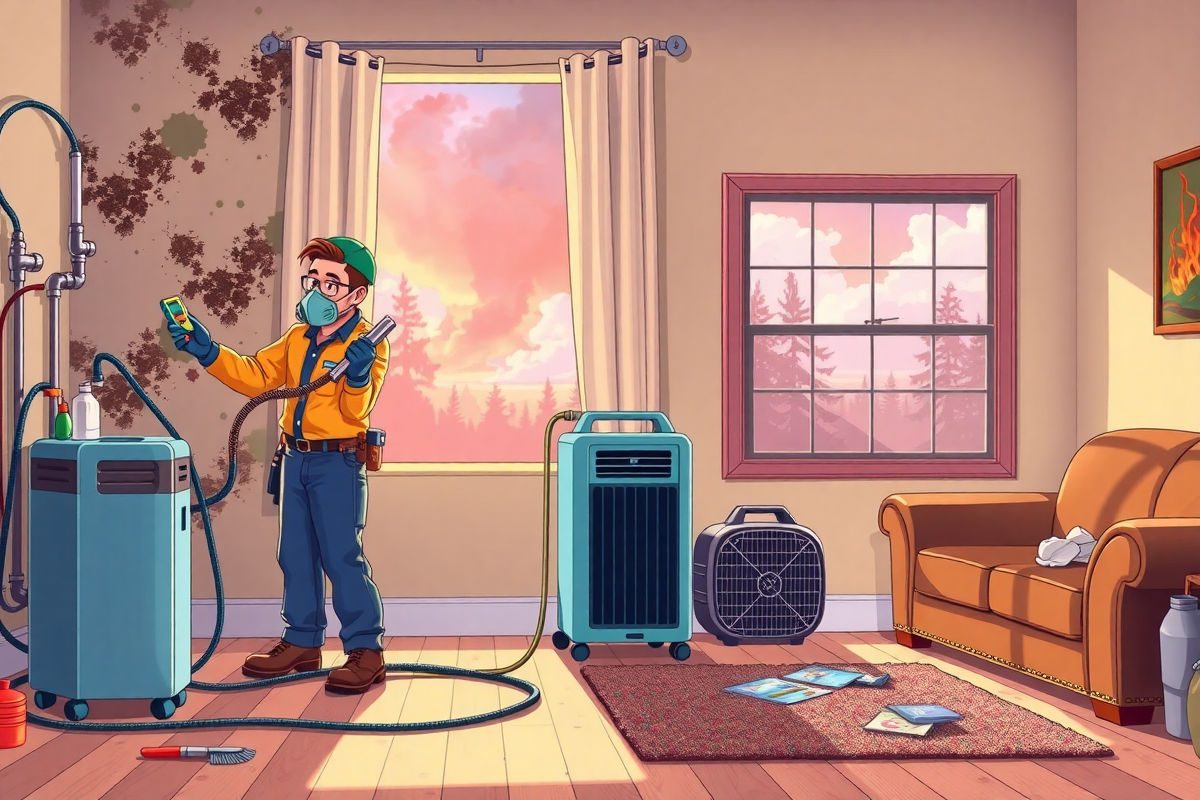
Monitoring and improving indoor air quality is essential when restoring spaces affected by mold, wildfire smoke, and thirdhand smoke. Effective IAQ control protects occupants and remediation teams, reduces project delays, and limits long term health risks.
Start with continuous monitoring and clear action thresholds for PM2.5, humidity, and spore counts. Use negative air, HEPA filtration, and activated carbon where smoke residues are present. Prioritize wet removal, containment, and removal of heavily contaminated porous materials for mold. Test surfaces for smoke and thirdhand residues before reoccupation.
Protect staff with appropriate respiratory protection, regular breaks, mental health support, and duty rotation. Train crews to recognize masking effects of smoke and to prevent cross contamination during cleanup. Communicate air quality results and remediation steps clearly to occupants and insurers.
With consistent monitoring, validated cleaning methods, and attention to team wellbeing, remediation outcomes improve and long term exposures fall. Addressing Indoor air quality in remediation: mold, wildfire smoke, and thirdhand smoke risks is not optional; it is central to safe, durable restoration.
Recommended Service: discover this trusted partner.
Company profile: This project provides practical and educational content on water damage mitigation and plumbing services across the United States. Our goal is to help homeowners understand the risks associated with leaks, floods, moisture, mold, and common plumbing issues. We share clear, accessible information on water cleanup, structural drying, damage inspections, mold prevention, and reliable plumbing solutions. All of our content is designed to support home safety and maintenance, backed by the availability of certified technicians in every state, ready to assist 24/7 nationwide. Nothing in our articles replaces professional evaluations, repairs, or recommendations from qualified specialists.
Online profiles: Website: plumbingandwatercare.blog
Blog: plumbingandwatercare.blog/blog
Medium: Twitter:
Frequently Asked Questions
How does indoor remediation affect indoor air quality?
Remediation disturbs contaminants. For example, mold spores, soot, and thirdhand smoke residues become airborne when materials are removed. As a result, IAQ can worsen without containment, negative air, and HEPA filtration. Therefore, professionals use monitoring and staged controls to limit spread.
How can I tell if mold, wildfire smoke, or thirdhand residues remain after cleanup?
Look for new or persistent odors, ongoing respiratory symptoms, dusty film on surfaces, or visible mold spots. Also, use portable particle monitors and request professional surface or air sampling for confirmation. If symptoms persist, get testing.
What should I do immediately as a homeowner before pros arrive?
First, avoid disturbing affected materials. Close doors and vents to limit spread. Next, if outdoor air is cleaner, ventilate briefly. However, during wildfire events keep windows closed. Finally, remove pets and vulnerable people from the home.
Can regular cleaning remove thirdhand smoke and wildfire residues?
Regular cleaning reduces residues on hard surfaces. Yet porous items often retain toxins. Therefore, deep cleaning, material removal, and specialized cleaners are common. Professionals may recommend replacing insulation, carpet, and HVAC filters.
When should I call a remediation professional?
Call when damage covers large areas, when occupants have health symptoms, or when smoke residues or mold return after cleaning. Professionals will test, set containment, run negative air, and advise on repairs and reoccupation timing.