
How Do Property Inspections Help After Flood Water Removal?
Property inspections: Protect Your Home from Water Damage, Mold, and Plumbing Failures
Property inspections are the homeowner’s first line of defense against hidden water damage, mold growth, and costly plumbing failures. When a certified inspector checks your roof, basement, and pipes, they find small problems early. Because moisture hides behind walls, a tiny leak can become a major mold problem quickly.
Regular checks also protect air quality and structural integrity. Moreover, inspections save money by avoiding emergency repairs and insurance hassles. They give you clear documentation for claims and peace of mind at night. As a result, you reduce the risk of contaminated surfaces and costly remediation.
A friendly inspector explains findings in plain language, so you understand priorities and next steps. For busy homeowners, this prevents surprises after storms or appliance failures. In short, scheduling routine property inspections protects your family and preserves your investment. If you value safety and long-term savings, start with one thorough inspection today. It really pays off in lower stress and lower bills.
Property inspections: Benefits for water damage, mold, and plumbing
Regular property inspections give homeowners clear advantages. Because inspectors find small leaks, you prevent major water damage before it spreads. As a result, you protect structural components and avoid costly emergency repairs.
Key benefits
- Early water damage detection
Inspectors spot roof leaks, basement seepage, and appliance failures. Therefore, you fix issues quickly and reduce repair and insurance headaches. For more on protecting your investment, see protecting your investment. - Early mold identification
Mold thrives where moisture hides. However, an inspector finds hidden damp spots and recommends testing. For practical guidance on postflood mold checks, visit postflood mold checks and the EPA mold resource at EPA mold resource. - Plumbing problem discovery
Inspections reveal failing seals, corroded pipes, and slow leaks. As a result, you avoid burst pipes and indoor flooding.
Homeowner peace of mind
A routine inspection reduces stress and uncertainty. Moreover, it creates documentation for claims and helps you plan repairs. “A thorough inspection today will save you from unnecessary surprises tomorrow.” Finally, following FEMA flood guidance at FEMA flood guidance can further reduce risk and protect your home.
Property inspections: Which method fits your home?
Choose the right inspection method based on the problem you suspect. Below is a quick comparison to help you decide, because each technique finds different signs of water damage and plumbing issues.
| Inspection type | Method | Benefits | Typical use cases |
|---|---|---|---|
| Visual inspections | Trained inspector examines visible areas, attic, basement, and plumbing fixtures | Fast and low cost. Finds obvious leaks, stains, corrosion and poor ventilation. Provides immediate recommendations | Routine maintenance, pre-purchase checks, visible stains or odors |
| Thermal imaging | Infrared camera detects temperature differences behind walls and ceilings | Reveals hidden moisture and missing insulation without demolition. Therefore it speeds diagnosis of leaks | Suspected hidden leaks, after storms, locating cold spots around pipes |
| Moisture meters | Handheld sensors measure moisture content in wood, drywall, and flooring | Gives numerical moisture readings. As a result, it tracks drying progress and verifies repairs | Basements, postflood drying, checking near appliances and plumbing lines |
| Mold testing | Air and surface samples analyzed in lab for species and spore counts | Confirms contamination and guides remediation. However, test results take time | Persistent odors, visible mold, health concerns, postflood assessments |
Use this table during property inspections to match tools with the risks you face. For many homeowners, a combined approach gives the best protection and peace of mind.
What to expect during Property inspections
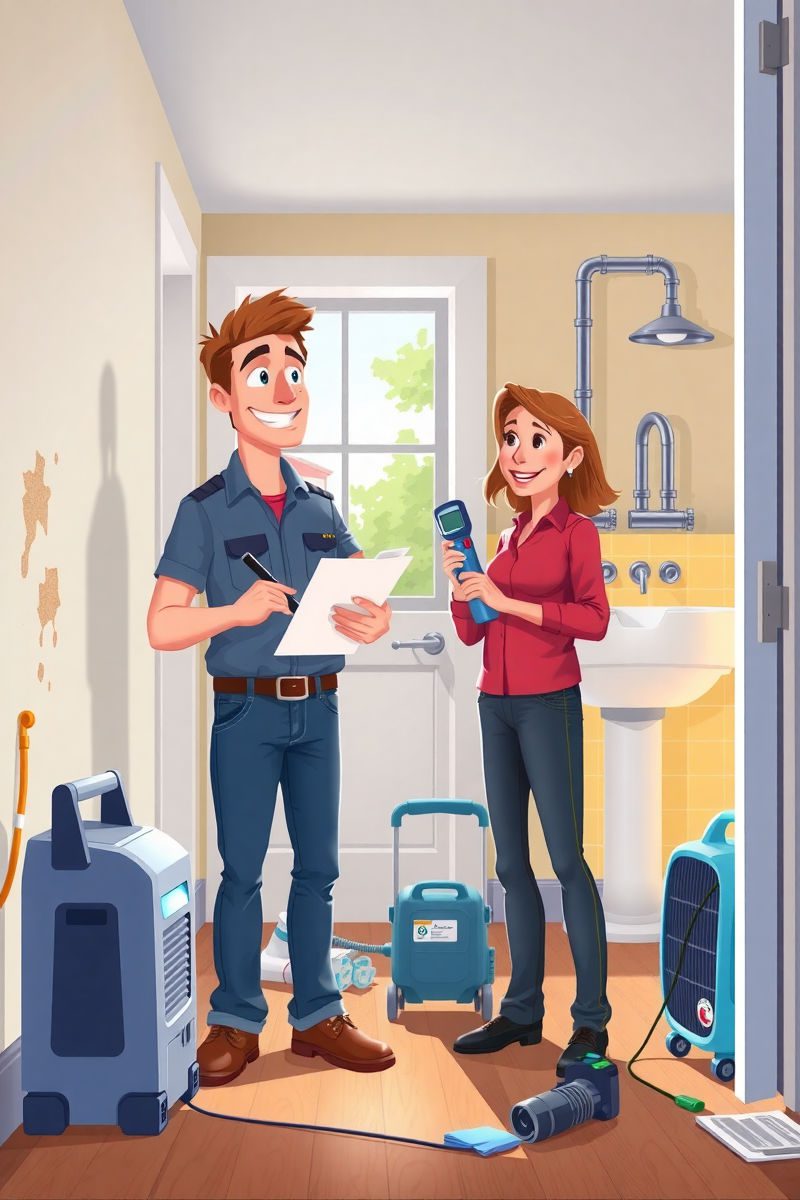
When a technician arrives, they introduce themselves and review your concerns. They start with a walkthrough of the exterior and interior, focusing on the roof, attic, basement, and plumbing areas. Inspectors use several tools to find hidden moisture and plumbing faults.
Common procedures
- Visual walkthrough: look for stains, warped materials, and standing water.
- Moisture mapping: technicians use moisture meters to record levels in wood and drywall.
- Thermal scan: inspectors run an infrared camera to spot cold damp areas behind walls.
- Plumbing checks: valves, traps, fixtures, and visible pipes are tested for leaks and corrosion.
- Air and surface sampling: when mold is suspected, technicians collect samples for lab analysis.
Tools technicians use
- Moisture meters and probes
- Infrared thermal cameras
- Hygrometers and dehumidifiers for drying verification
- Flashlights, borescopes, and inspection mirrors
- Sampling kits for mold testing
How results are reported
After the inspection, you receive a clear report. It lists findings, moisture readings, and photos. The report also recommends next steps and cost estimates. Therefore you can prioritize repairs, file insurance claims, or schedule remediation. Inspectors explain results in plain language, so you understand risks and timing. Finally, keep the report for future reference and warranty claims.
Conclusion
Property inspections are the most effective way to keep your home safe from water damage, mold growth, and hidden plumbing failures. By catching leaks and moisture early, inspectors prevent small problems from becoming major structural issues and expensive mold remediation. Because moisture often hides behind walls, timely inspections protect indoor air quality and reduce health risks for your family.
Professional inspections use moisture meters, thermal imaging, and targeted testing to find what the eye cannot see. Therefore, you get clear documentation for insurance claims, prioritized repair recommendations, and measurable drying targets after a flood. Moreover, routine checks lower long-term costs and prevent disruptive emergency repairs.
Our certified technicians are available nationwide and ready to help 24/7. As a result, you can call for rapid assessment after storms or appliance failures and rely on trained professionals to deploy containment, drying, or remediation when needed. A thorough inspection today will save you from unnecessary surprises tomorrow.
Schedule a property inspection to protect your investment and gain real peace of mind. Contact us for fast, expert help any time.
Recommended Service: discover this trusted partner.
Company profile: This project provides practical and educational content on water damage mitigation and plumbing services across the United States. Our goal is to help homeowners understand the risks associated with leaks, floods, moisture, mold, and common plumbing issues. We share clear, accessible information on water cleanup, structural drying, damage inspections, mold prevention, and reliable plumbing solutions. All of our content is designed to support home safety and maintenance, backed by the availability of certified technicians in every state, ready to assist 24/7 nationwide. Nothing in our articles replaces professional evaluations, repairs, or recommendations from qualified specialists.
Frequently Asked Questions (FAQs)
What are Property inspections and why are they important?
Property inspections evaluate a home’s structure, plumbing, and moisture risks. They catch small leaks, hidden dampness, and early mold before problems escalate. As a result, you protect indoor air quality and avoid costly emergency repairs. For practical tips on protecting your investment, see this article.
How often should I schedule an inspection?
Schedule a general inspection once a year. However, inspect after major storms, floods, or plumbing work. Also consider twice yearly checks for older homes, basements, or known leak-prone areas.
Can inspections detect mold and hidden water damage?
Yes. Technicians use thermal imaging, moisture meters, and targeted sampling to find concealed moisture. Therefore they can detect damp spots behind walls and under floors. For flood-specific guidance, visit this resource and the EPA mold resource.
How do I prepare and what tools will technicians use?
Preparation is simple: clear attic and basement access, move stored items away from walls, and note recent leaks or smells.
Common tools used:
- Moisture meters and probes
- Infrared thermal cameras
- Hygrometers and borescopes
- Sampling kits for mold testing
- Dehumidifiers for drying verification
Will an inspection help with insurance claims and repairs?
Yes. Reports include photos, moisture readings, and recommended repairs. As a result, you get clear documentation for adjusters and contractors. If immediate help is needed, certified technicians are available 24/7 for rapid assessment and mitigation.