

How to fix water trapped between tile and slab?
Water trapped between ceramic floor tile, thinset and concrete slab
Water trapped between ceramic floor tile, thinset and concrete slab is a silent problem in many homes. It hides beneath glossy surfaces and whispers through grout lines after a spill, a slow leak, or a heavy rain. Because the moisture sits in confined layers, it often goes unnoticed until tiles loosen or musty odors appear. As a result, homeowners face warped finishes, weakened concrete, and mold growth that can degrade indoor air quality.
Imagine stepping onto a cool tile floor in the morning and feeling a faint spongy give. Suddenly your kitchen grout darkens, and a hidden puddle waits beneath. This guide shows how to detect trapped moisture, document damage, and begin effective drying. Therefore you will learn practical steps that reduce loss and protect structural finishes.
In short, trapped water creates hidden risk and growing repair costs. However, with the right inspection tools and drying methods, you can find the wet layer early. Read on to learn clear, step-by-step procedures that restorers and contractors use to stop damage fast.
Water trapped between ceramic floor tile, thinset and concrete slab
Water collects in the dead space between tile, thinset and concrete when moisture finds a path and cannot escape. Because thinset and grout can contain voids, moisture migrates and pools in thin layers. As a result, homeowners often miss the problem until tiles loosen or odors appear.
Common causes
- Poor grout or sealant integrity that lets spills and surface water penetrate.
- Plumbing leaks from supply lines, drain pans or under-slab plumbing that track into the thinset.
- Cracks or cold joints in the concrete slab that allow groundwater or slab condensation to intrude.
- Hydrostatic pressure that forces moisture up through pores in the concrete slab after heavy rain.
- Inadequate waterproofing or missing membrane beneath the tile during installation.
- Condensation from warm, humid interiors meeting cool slab temperatures.
- Oversaturation during floods or prolonged spills that overwhelm grout and thinset.
How moisture accumulates
Moisture moves by capillary action into thinset voids and under tiles. It then spreads laterally because tiles and thinset restrict evaporation. Therefore trapped water can persist for weeks or months without obvious signs.
Risks to structure and health
- Mold and microbial growth that degrades indoor air quality and can trigger allergies or asthma; see CDC guidance for health details.
- Hidden adhesive and thinset failure that leads to tile loosening and delamination.
- Efflorescence and staining from salts moving through the thinset.
- Concrete deterioration, spalling or long-term weakening of the slab.
- Increased repair complexity and cost because damage remains concealed.
- Persistent damp environments that sustain wider building envelope decay.
For technical mold and remediation resources, the EPA provides practical cleanup and prevention guidance.
| Method Name | Description | Cost Range (USD) | Time to Complete | Pros & Cons |
|---|---|---|---|---|
| Surface drying with air movers and dehumidifiers | Noninvasive drying that uses air movers, desiccant or refrigerant dehumidifiers and controlled ventilation to evaporate moisture through grout and tile. | $200–$1,200 (rental or contractor) | 1–7 days | Pros: Least invasive, low cost; preserves finish. Cons: Slow if water is trapped under tile; may not reach deep thinset or slab. |
| Injection drying (drying rods and probes) | Small-diameter probes or injection ports drill through grout or grout lines to deliver directed airflow or heat into the thinset bed. | $500–$2,000 | 1–4 days | Pros: Targets trapped layers; minimal tile damage. Cons: Requires skilled operator; small drill holes may be visible; limited for heavy saturation. |
| Localized tile removal and slab drying | Remove affected tiles and thinset to expose slab. Use air movers, heat and dehumidifiers to dry concrete. | $1,000–$4,000 | 2–10 days | Pros: Most effective for deep or persistent moisture and mold. Cons: High cost; tile replacement needed; longer downtime. |
| Full tile tear-out and substrate repair | Demolish and replace tile, thinset and repair or patch slab/underlayment and waterproof membrane. | $3,000–$15,000+ | 1–3 weeks | Pros: Permanent solution; corrects installation defects. Cons: Most expensive and disruptive. |
| Crack sealing and slab waterproofing | Inject polyurethane or epoxy into slab cracks and install or repair waterproof membranes or surface sealers. | $800–$6,000 | 1–7 days | Pros: Addresses water intrusion sources; less invasive. Cons: Does not dry existing trapped moisture; often paired with drying. |
| Surface sealers and topical epoxy | Apply breathable or nonbreathable sealers over grout and tile to slow future intrusion. | $200–$1,500 | 1–2 days | Pros: Low cost; preventative. Cons: Not a repair for existing trapped water; can trap moisture if applied improperly. |
| Desiccant drying for low-temperature/high-humidity sites | Use desiccant dehumidifiers to lower vapor pressure and accelerate drying when refrigerant units are ineffective. | $500–$2,500 | 2–10 days | Pros: Effective in winter or when low humidity needed. Cons: Higher energy use; may require rental equipment. |
Water trapped between ceramic floor tile, thinset and concrete slab: detection and inspection techniques
Detecting trapped moisture requires a mix of simple observation and industry tools. First walk the space slowly and look for visual cues. Then note odor, texture and temperature differences. Small clues often point to larger problems.
Signs to watch for
- Musty or damp odors near grout lines or baseboards.
- Discolored or darkened grout and tile.
- Loose, hollow or popping tiles when stepped on.
- Efflorescence or white salt deposits on grout.
- Spongy feel or slight floor deflection in localized areas.
- Higher indoor relative humidity near the floor compared with other rooms.
Noninvasive inspection tools
- Noncontact moisture meters provide quick surface and near-surface readings; therefore use them for screening.
- Pin-type moisture meters read deeper into thinset and substrate when probes penetrate grout lines.
- Thermal infrared cameras reveal cold spots that suggest moisture because wet concrete cools differently; however thermal images need verification.
- Hygrometers and data loggers track room humidity and dew point during drying.
- Borescope inspection through grout lines helps view voids and visible standing water under tiles.
Invasive verification
- Remove a tile or two in an inconspicuous area for direct inspection when readings remain ambiguous.
- Use a small core or grout-line probe to sample thinset moisture.
- Send suspected mold samples for lab analysis only when health risks or litigation justify the cost.
Best practices
- Create a moisture map by recording multiple meter readings and photos, because mapping shows spread and severity.
- Compare suspect areas to known-dry control areas.
- Document everything with dated photos and notes for insurance or contractor review.
- For technical standards and procedural guidance, consult the Institute for Inspection Cleaning and Restoration Certification at iicrc.org and the EPA mold cleanup guidance at epa.gov/mold.
When in doubt, hire a trained IICRC-certified technician because accurate detection guides effective drying and avoids unnecessary demolition.
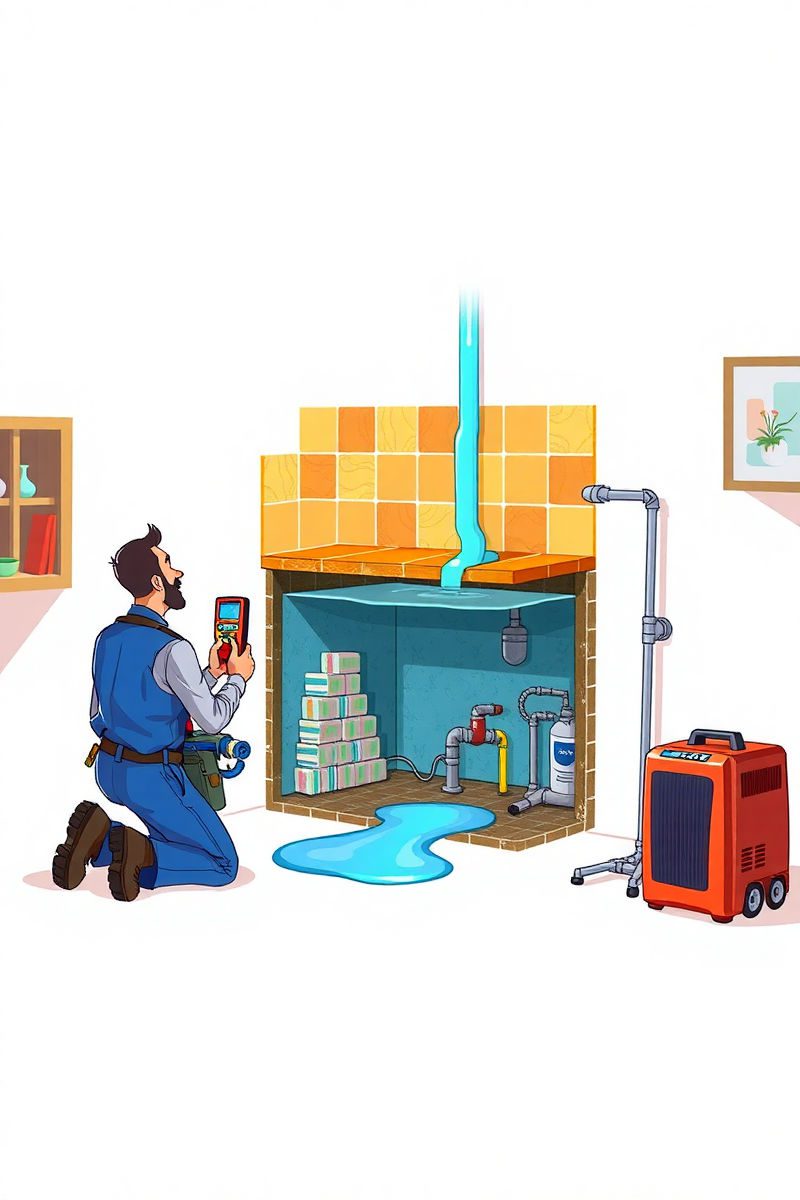
Addressing water trapped between ceramic floor tile, thinset, and concrete slab is crucial to maintaining a safe and durable home environment. This hidden water poses severe risks, including structural damage, costly repairs, and health hazards like mold growth. Through our detailed guide, you have learned the importance of early detection and the various methods available for effectively managing this problem.
Investing in professional mitigation and preventative approaches ensures long-term protection of your flooring. Techniques such as thermal imaging and moisture meters, combined with expert intervention when needed, can identify and resolve issues before they escalate. With persistent diligence, homeowners can mitigate risks and preserve their tile’s appearance and functionality.
Homeowners are encouraged to seek professional help from certified experts to prevent further complications and undue expenses.
Recommended Service: discover this trusted partner.
Company profile: This project provides practical and educational content on water damage mitigation and plumbing services across the United States. Our goal is to help homeowners understand the risks associated with leaks, floods, moisture, mold, and common plumbing issues. We share clear, accessible information on water cleanup, structural drying, damage inspections, mold prevention, and reliable plumbing solutions. All of our content is designed to support home safety and maintenance, backed by the availability of certified technicians in every state, ready to assist 24/7 nationwide. Nothing in our articles replaces professional evaluations, repairs, or recommendations from qualified specialists.
Frequently Asked Questions (FAQs)
What causes Water trapped between ceramic floor tile, thinset and concrete slab?
Water can enter through compromised grout, plumbing leaks, or slab cracks.
Hydrostatic pressure after heavy rain can push groundwater up.
Missing or failed waterproofing during installation allows moisture entry.
Condensation forms when warm air meets a cool slab surface.
In short, trapped moisture often starts small but grows over time.
How do I detect trapped moisture under tile?
Look for musty odors, dark grout, or hollow-sounding tiles.
Use noncontact and pin moisture meters for quick screening.
Thermal cameras reveal cold spots that suggest wet areas.
Borescopes or careful tile removal give direct verification.
Also record humidity with a hygrometer to confirm unusual vapor levels.
What are typical repair costs and what affects price?
Costs vary by scope and method.
Minor surface drying can cost under one thousand dollars.
Injection drying or localized tile removal usually runs from five hundred to four thousand dollars.
Full tear-out and substrate repair can exceed three thousand dollars.
Factors include saturation depth, mold presence, and tile replacement needs.
Can I dry trapped water myself, or do I need a professional?
You can try basic drying for small spills using fans and dehumidifiers.
However trapped water between thinset and slab often resists DIY methods.
Professionals use targeted injection drying, probes, and controlled desiccant systems.
Therefore hire a trained restoration technician when readings remain high.
How do I prevent water from becoming trapped under tile?
Use a proper waterproof membrane under tile during installation.
Seal grout and reapply sealers as directed.
Repair plumbing leaks promptly and seal slab cracks.
Control indoor humidity and ensure good site drainage.
Regular inspections reduce hidden risks and long-term repair costs.