How can Property inspections protect your investment?
Property inspections: Catch hidden moisture, mold, and structural risks early
Property inspections are the first and best defense against costly surprises. Because water hides behind walls, a quick check can reveal leaks, plumbing issues, mold growth, and structural weakness before they worsen. Therefore, buyers, sellers, and homeowners should prioritize a professional inspection.
A thorough inspection protects your investment and keeps people safe. However, many problems remain invisible without moisture meters, thermal imaging, and a trained eye. As a result, routine home inspections and plumbing inspections reduce repair costs and insurance headaches.
What you will learn in this guide
- How inspectors detect water damage and hidden moisture using modern tools.
- Why plumbing inspection matters for water pressure, leaks, and aging pipes.
- Signs of mold risk and steps for mold detection and remediation.
- How structural inspection checks foundations, framing, roofs, and floors.
- When to call certified restoration or emergency water cleanup services.
- Tips on coordinating inspections with insurers and contractors.
By reading on, you will gain clear, actionable steps to spot risks early, schedule repairs fast, and protect your property’s structural integrity and indoor air quality.
Property inspections: what inspectors look for and why it matters
A professional property inspection digs beneath the surface. Inspectors use tools and training to find water damage, moisture intrusion, and early signs of structural decay. Because hidden moisture drives mold, rot, and failing materials, timely detection is critical. As a result, an inspection helps you act before small problems become expensive disasters.
The step-by-step property inspections process
- Visual walkthrough. Inspectors examine foundations, walls, roofs, attic spaces, basements, and visible plumbing. They look for stains, warping, and sagging.
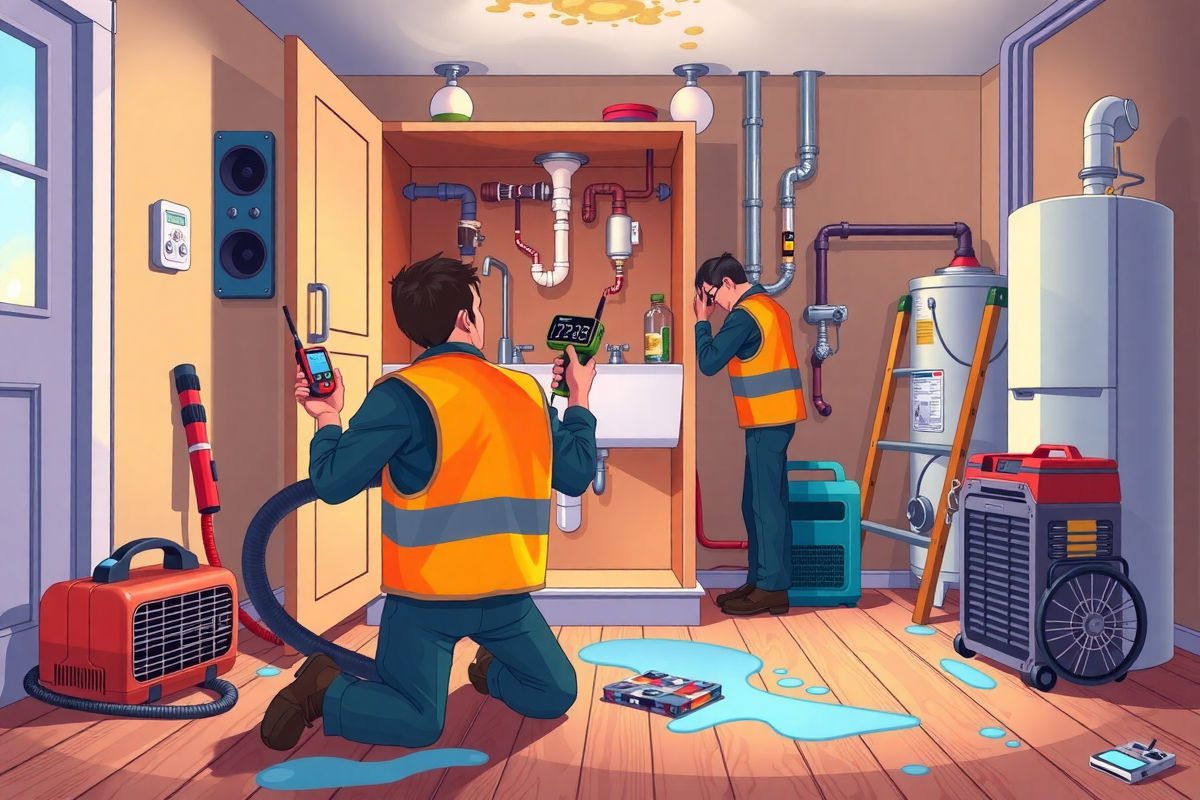
- Moisture scanning. Inspectors use moisture meters and thermal imaging to find concealed dampness behind walls and under flooring.
- Plumbing evaluation. Technicians test water pressure, inspect exposed pipes, check fixtures, and assess water heater condition and drainage.
- Air quality and mold checks. Where moisture appears, inspectors sample the air or surfaces for mold to measure risk.
- Structural review and recommendations. Inspectors note compromised framing, floor joists, or roofing and outline repairs.
Focus areas: water damage, drying, and mold prevention
- Detect leaks early with moisture meters and infrared cameras. Early detection limits structural rot.
- Begin structural drying fast with air movers and dehumidifiers to stop mold growth.
- Verify ventilation and insulation to prevent recurring condensation and moisture problems.
- Coordinate mold remediation only when testing shows active growth. For guidance on mold health risks and cleanup, review EPA resources and Health Canada guidance.
Plumbing considerations during inspections
- Check for slow drains and sewer backup signs. These often indicate hidden pipe damage.
- Inspect aging pipes for corrosion and leaks. Old galvanized or polybutylene pipes need special attention.
- Test water heaters and pressure regulators to prevent bursts and scalding risks.
How inspections reduce homeowner risk and save money
- Preventative detection avoids major repairs later, therefore lowering long-term costs.
- Accurate inspection reports strengthen insurance claims and negotiations when selling.
- Early mold detection prevents remediation that is often far more costly than repairs.
- Quick coordination with restoration professionals speeds recovery. Learn why fast response matters in multi-unit settings: water cleanup in multi-unit restoration and why local restoration teams act fast: water damage restoration.
Plumbing inspections and water damage detection
Plumbing inspections are central to finding and preventing water damage. Because pipes and fixtures fail slowly, a proactive inspection uncovers hidden leaks before they turn into floods. Therefore, combining plumbing checks with a full property inspection reduces unexpected repair costs and health risks.
Common plumbing problems that lead to leaks and flooding
- Corroded or aging pipes that develop pinhole leaks.
- Loose or failing fittings at joints and fixtures.
- Clogged drains and slow-moving water that cause backups.
- Faulty water heaters that leak or burst.
- Failed seals around tubs, showers, and toilets that allow hidden seepage.
- Blocked sewer lines and tree root intrusion that cause major backups.
Signs homeowners should watch for
- Musty or damp odors in basements and crawlspaces because mold often follows leaks.
- Stains on ceilings or walls that spread over time.
- Peeling paint, bubbling wallpaper, or warped floors.
- Sudden increases in water bills with no change in usage.
- Low water pressure or noisy pipes that indicate internal damage.
For more on mold health risks and cleanup, consult the EPA and the CDC mold information.
How professional plumbing services integrate with property inspections
- Plumbers use video camera inspections to find hidden breaks inside walls.
- Inspectors coordinate with licensed plumbers when moisture scans find wet cavities.
- Restoration teams then begin structural drying and repairs, therefore limiting mold growth.
- Fast, coordinated response matters in apartment buildings. For examples, see why speed matters in multi-unit restorations: this link and how local restoration services save homes fast: this link.
Actionable steps to prevent plumbing-related water damage
- Schedule annual plumbing inspections, especially before buying or selling.
- Install water shutoff valves and test them twice yearly.
- Keep gutters and exterior drains clean so water cannot enter foundations.
- Address slow drains immediately; then have a professional camera inspection.
- Insure your home for water damage and document inspections for claims.
Comparison of inspection types relevant to water damage and plumbing
| Inspection Type | What It Detects | Typical Tools Used | Benefits |
|---|---|---|---|
| Visual property inspection | Surface stains, warped materials, obvious leaks, roofing issues | Flashlight, ladder, moisture meter (basic), checklist | Fast overview, good first step, flags immediate concerns |
| Moisture and thermal inspection | Hidden dampness, cold/wet spots, insulation gaps | Moisture meter, thermal imaging camera, hygrometer | Reveals concealed leaks, prioritizes areas for drying |
| Plumbing camera / sewer scope | Blockages, pipe breaks, root intrusion, joint failures | Video sewer camera, push rod, locator | Pinpoints pipe defects without demolition, guides targeted repairs |
| Water heater and pressure evaluation | Leaks, tank corrosion, pressure issues, faulty valves | Pressure gauge, leak detector, tank inspection tools | Prevents bursts, improves safety, extends equipment life |
| Structural and foundation inspection | Rot, compromised framing, settling, crack patterns | Level, tape, structural probe, foundation inspection tools | Identifies safety risks and costly structural repairs early |
| HVAC and duct / IAQ inspection | Condensation, clogged drains, mold in ducts, poor ventilation | Duct camera, airflow meter, particle counter | Improves drying, prevents mold spread, enhances indoor air quality |
| Mold-specific inspection | Active growth, spore concentration, moisture sources | Air and surface sampling, lab testing kits, moisture mapping | Validates remediation need, documents conditions for insurance |
| Post-flood / restoration inspection | Extent of contamination, saturation levels, drying progress | Moisture sensors, dehumidifiers, air movers, hygrometers | Guides structural drying, reduces mold risk, documents recovery |
CONCLUSION
Property inspections are a homeowner’s best defense against hidden water damage, mold, and structural failure. By prioritizing regular inspections and combining moisture scanning with plumbing checks, you catch small issues early. Because water damage spreads quickly, early action reduces repair bills and health risks. Therefore, schedule inspections before buying, after storms, and when you notice warning signs.
Professional inspectors use moisture meters, thermal cameras, and plumbing scopes. They uncover leaks behind walls, failing seals, and worn pipes. As a result, you avoid larger repairs such as framing replacement or full mold remediation. Inspectors also document conditions for insurance and help you coordinate with licensed plumbers and restoration teams.
If you find stains, musty odors, rising water bills, or low pressure, call a professional promptly. Fast drying and targeted plumbing repairs protect indoor air quality and structural integrity. In addition, certified teams can respond 24/7 when emergencies occur.
Trust third-party inspections to protect your investment and your family’s health. Take action now and book a full property inspection to stop hidden moisture before it becomes a costly problem.
Recommended Service: discover this trusted partner.
Company profile: This project provides practical and educational content on water damage mitigation and plumbing services across the United States. Our goal is to help homeowners understand the risks associated with leaks, floods, moisture, mold, and common plumbing issues. We share clear, accessible information on water cleanup, structural drying, damage inspections, mold prevention, and reliable plumbing solutions. All of our content is designed to support home safety and maintenance, backed by the availability of certified technicians in every state, ready to assist 24/7 nationwide. Nothing in our articles replaces professional evaluations, repairs, or recommendations from qualified specialists.
Frequently Asked Questions (FAQs)
What do property inspections check for regarding water damage?
Inspectors look for visible stains, warped materials, musty odors, and moisture behind walls. They use moisture meters and thermal cameras to find hidden dampness and identify sources like leaking pipes or poor roofing.
How often should I schedule a plumbing inspection?
Schedule a plumbing inspection annually and before buying or selling a home. Also inspect after major storms or if you notice slow drains, low pressure, or unexplained increases in your water bill.
Can inspections prevent mold growth?
Yes. Early detection of moisture and fast structural drying stop mold before it spreads. Inspections also identify ventilation and insulation problems that cause condensation.
When should I call emergency restoration services?
Call immediately for active flooding, burst pipes, or sewage backup. Fast response reduces structural damage and limits mold and contamination.
Will an inspection help with insurance claims?
Yes. A documented inspection report provides evidence of damage, timelines, and recommended repairs, which supports insurance claims and repair negotiations.